Gerstley Mine Shoshone, California
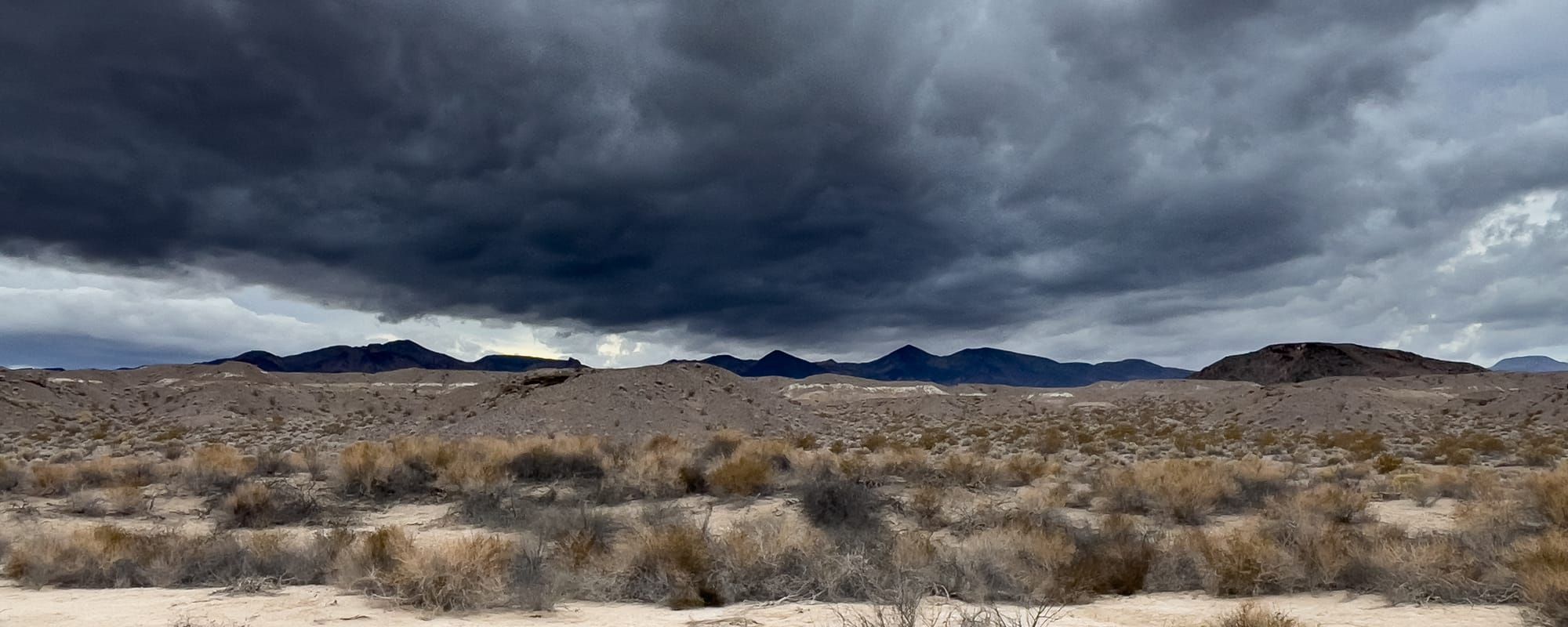
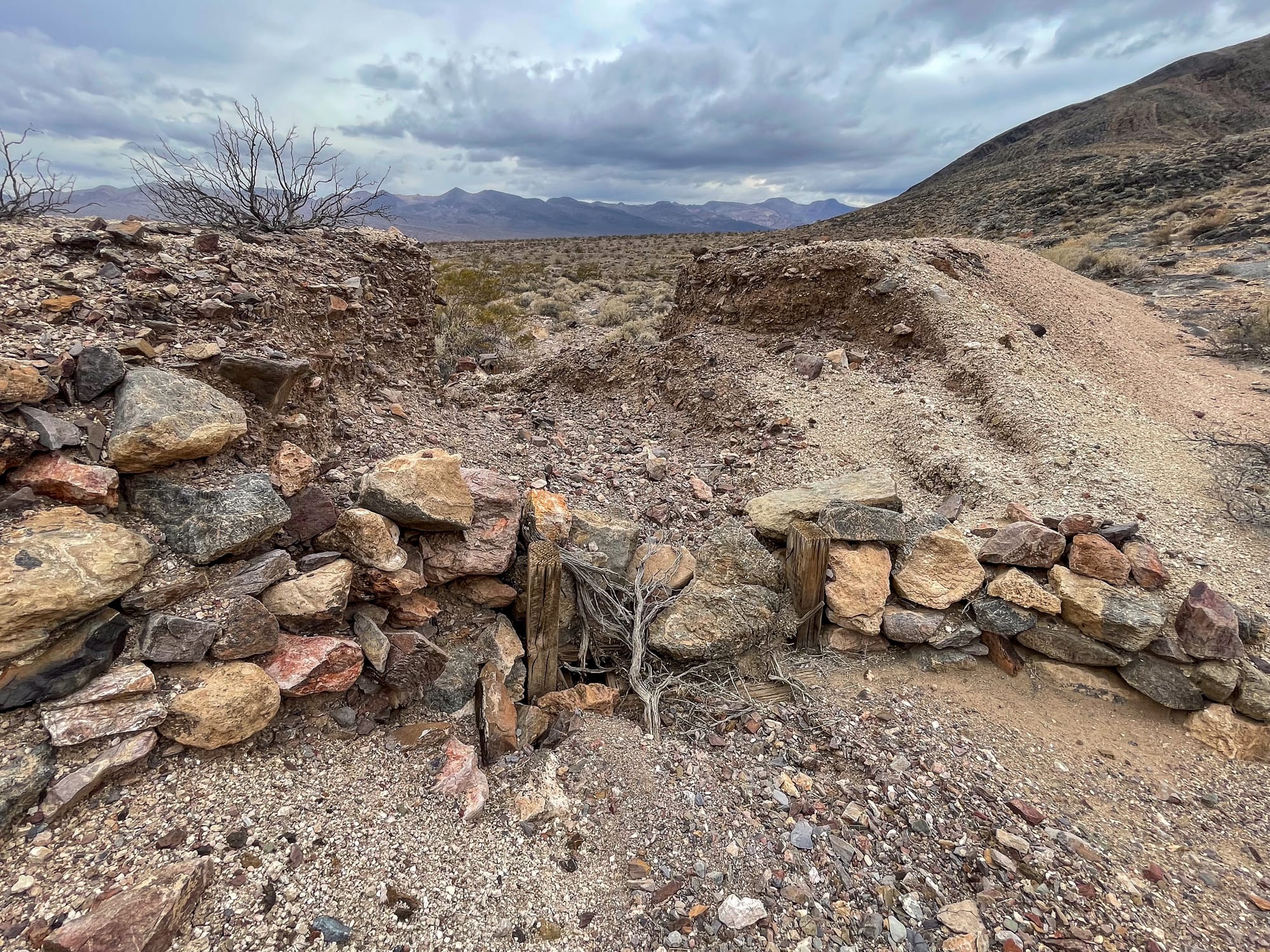
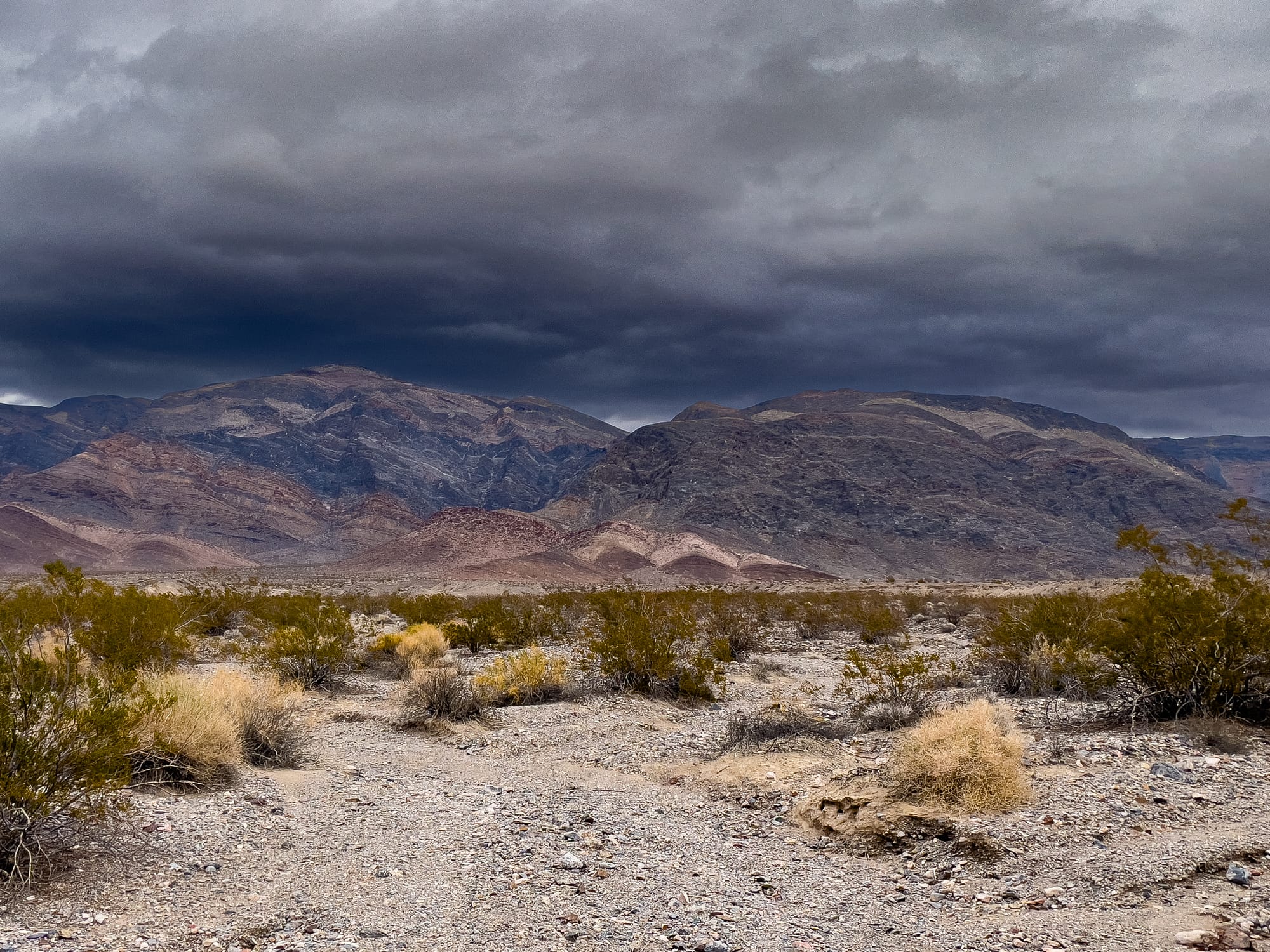
The last day of 2022 came in under a bruised sky. Stella and I drove out past Shoshone with a storm stacking up over the Resting Spring Range to the east, the kind of light that turns banded rock the color of an old photograph. A good day, in other words, to go look at a hole in the ground.
A borax hole with a banker's name
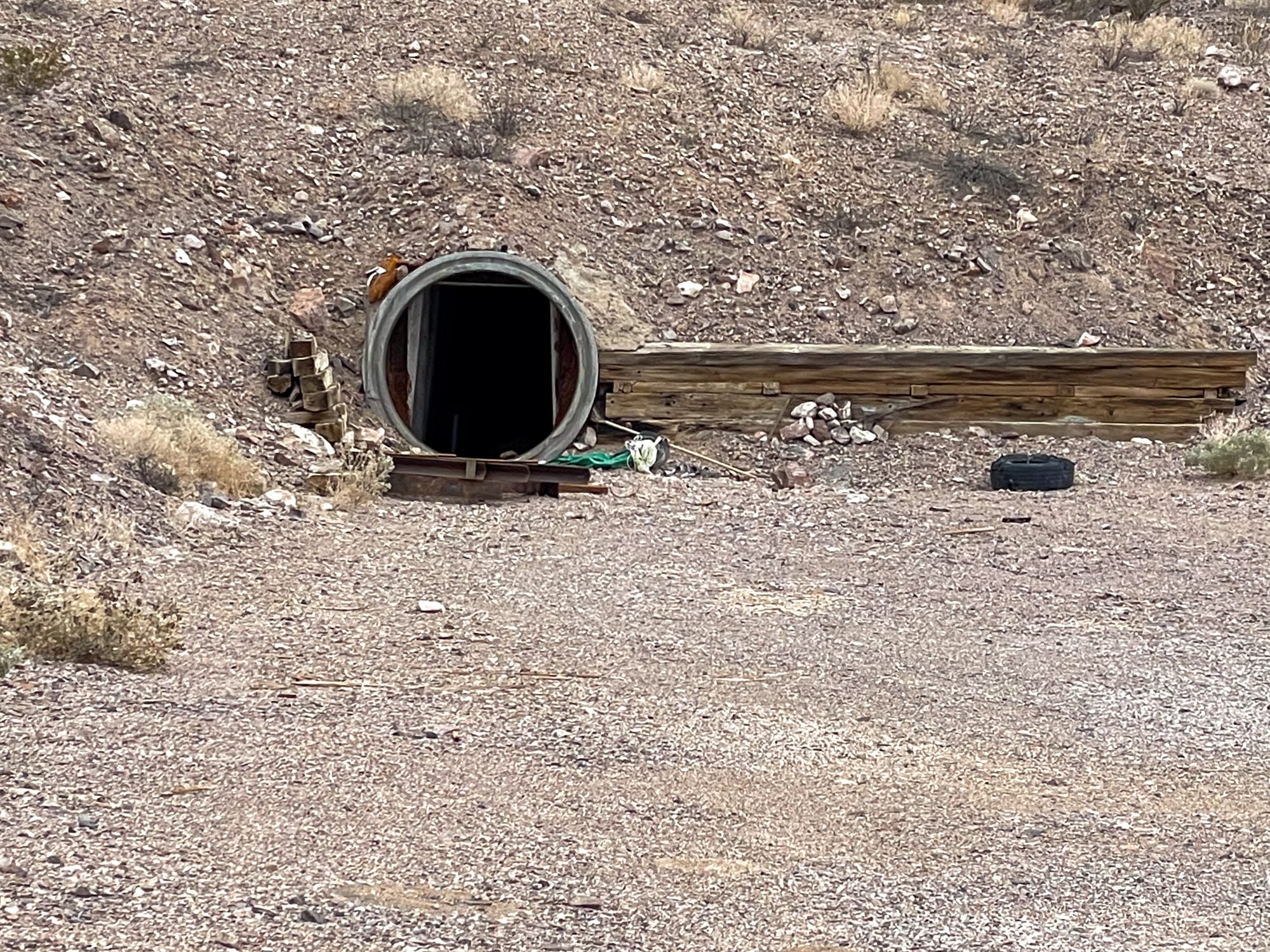
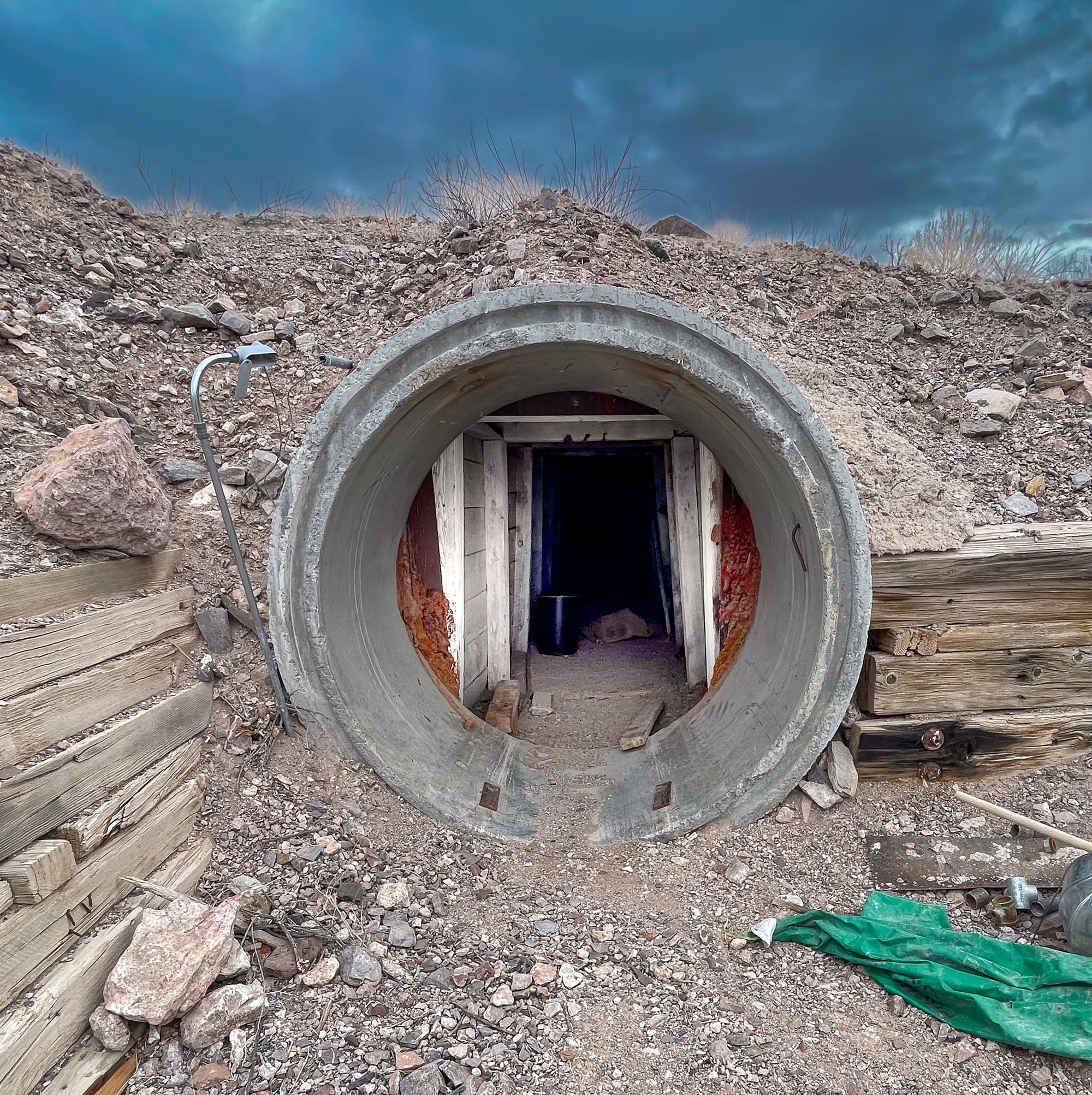
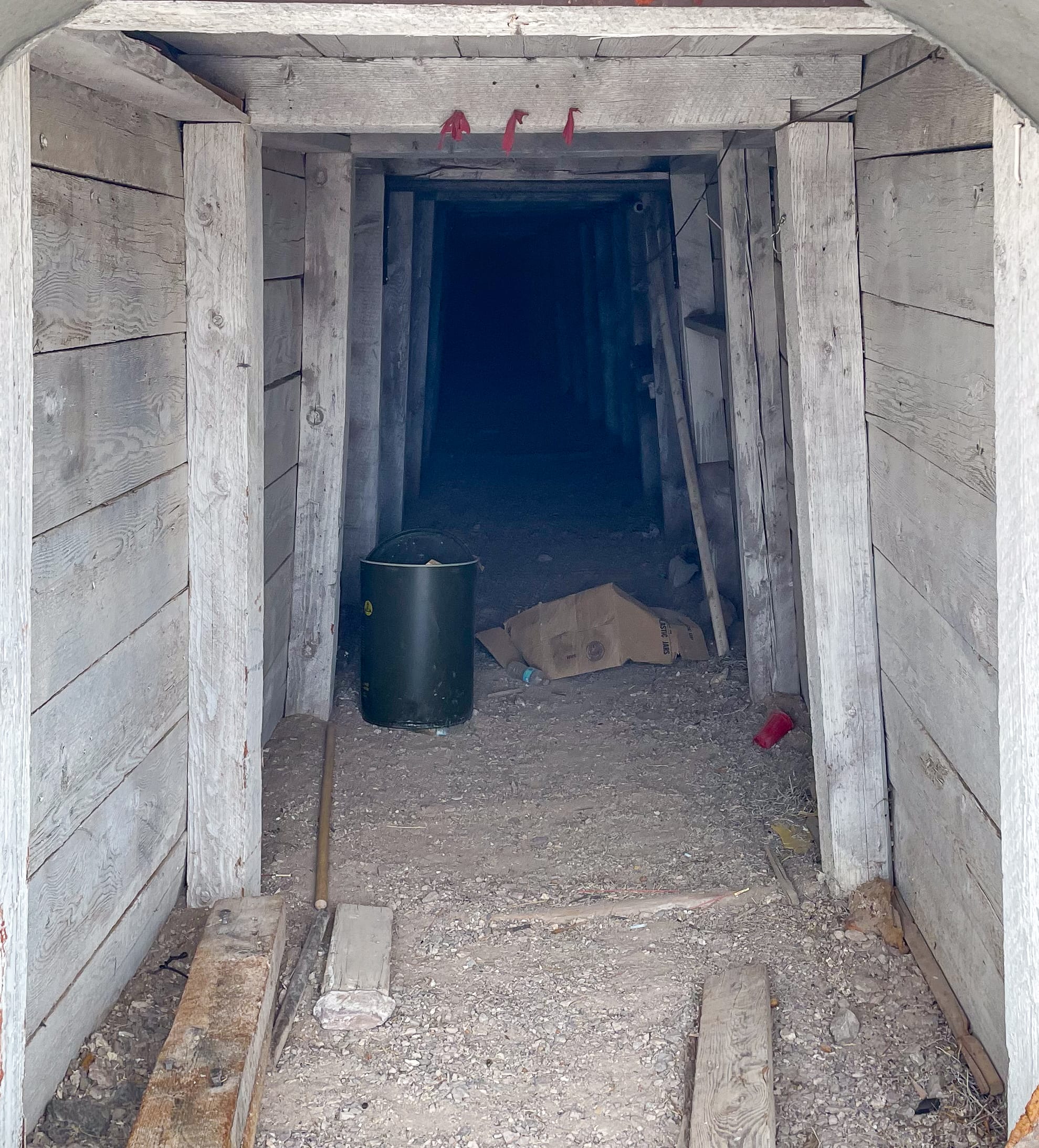
The Gerstley sits on the southwestern flank of the Resting Spring Range, northeast of Shoshone, on the southern edge of the Amargosa Valley and just outside the park line. A man named Jack Sheridan turned up the borate here in 1922. The mine wasn't named for him, though. It took the name of James M. Gerstley, who ran Borax Consolidated, Ltd. out of London and never, as far as I know, had to walk this ground in July. The Pacific Coast Borax Company staked claims almost as fast as Sheridan found the deposit; PCB was already working its mines over in the Ryan district deeper in the valley, so the Gerstley became one more node in an empire built on detergent, fiberglass, and twenty-mule-team mythology.
Then the bureaucracy showed up, the way it does. When the claims were filed it turned out a good chunk of the ore body sat on a state school section, land the government had set aside to throw off revenue for the teachers' retirement fund. So PCB's chief surveyor, Clarence Rasor, sat down with Sheridan and negotiated a lease on the state parcel. A two-year prospecting permit came through in 1922, and that May the state issued a full mineral lease, the first solid-mineral lease California ever granted. If you've ever driven I-15 toward Vegas and passed the Rasor Road exit out by Baker, that's the same Rasor. The desert keeps its accounts in place names.
The borax itself is old lake. Something like ten million years ago this was a closed basin collecting borate mud; later a sheet of volcanic ash, informally the Shoshone Volcanics, dated to roughly 9.5 million years, settled over the top and capped it. What the miners were chasing, down in the claystone and shale, was colemanite and ulexite, the calcium and sodium borates.
The baby gauge
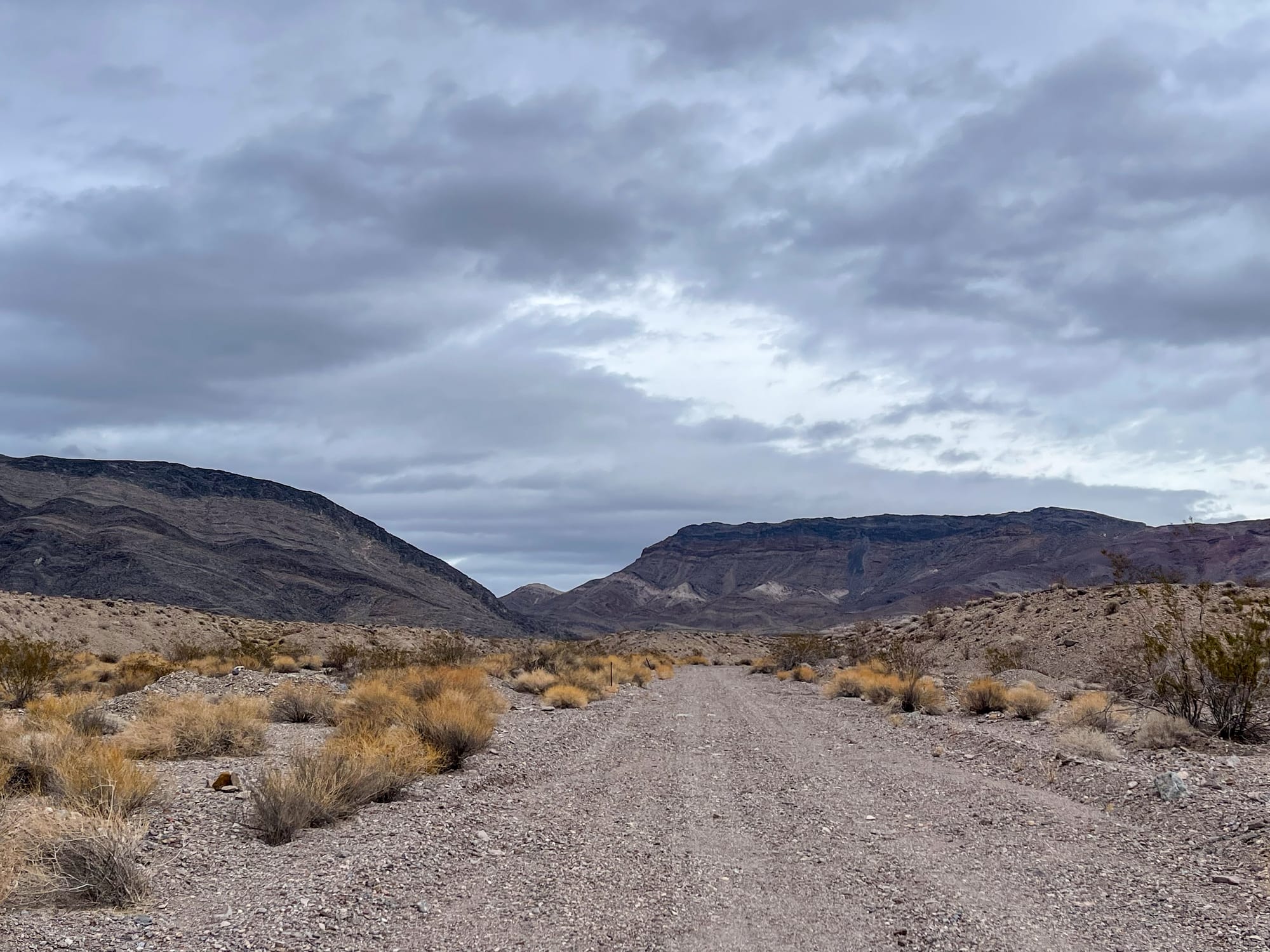
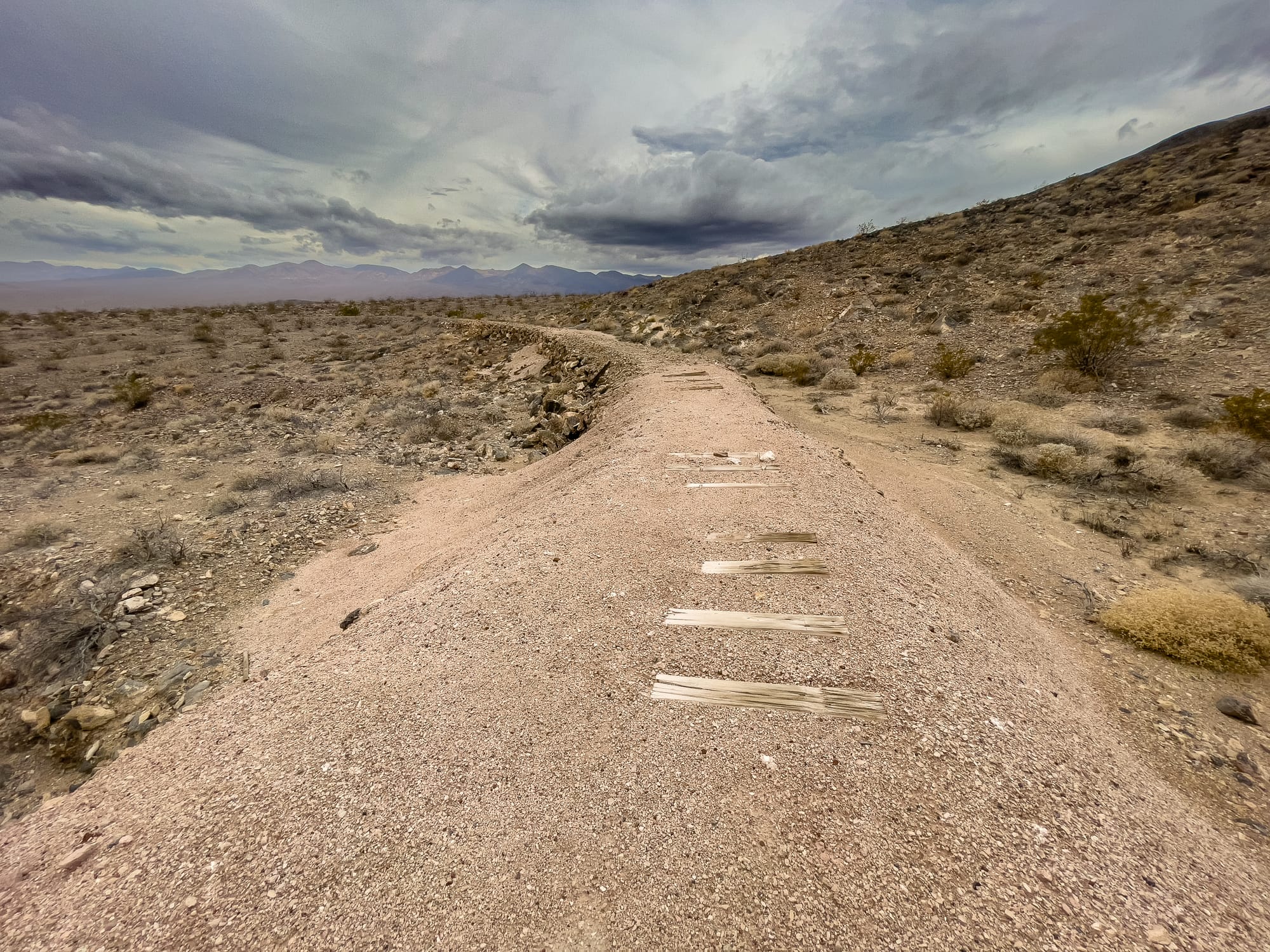
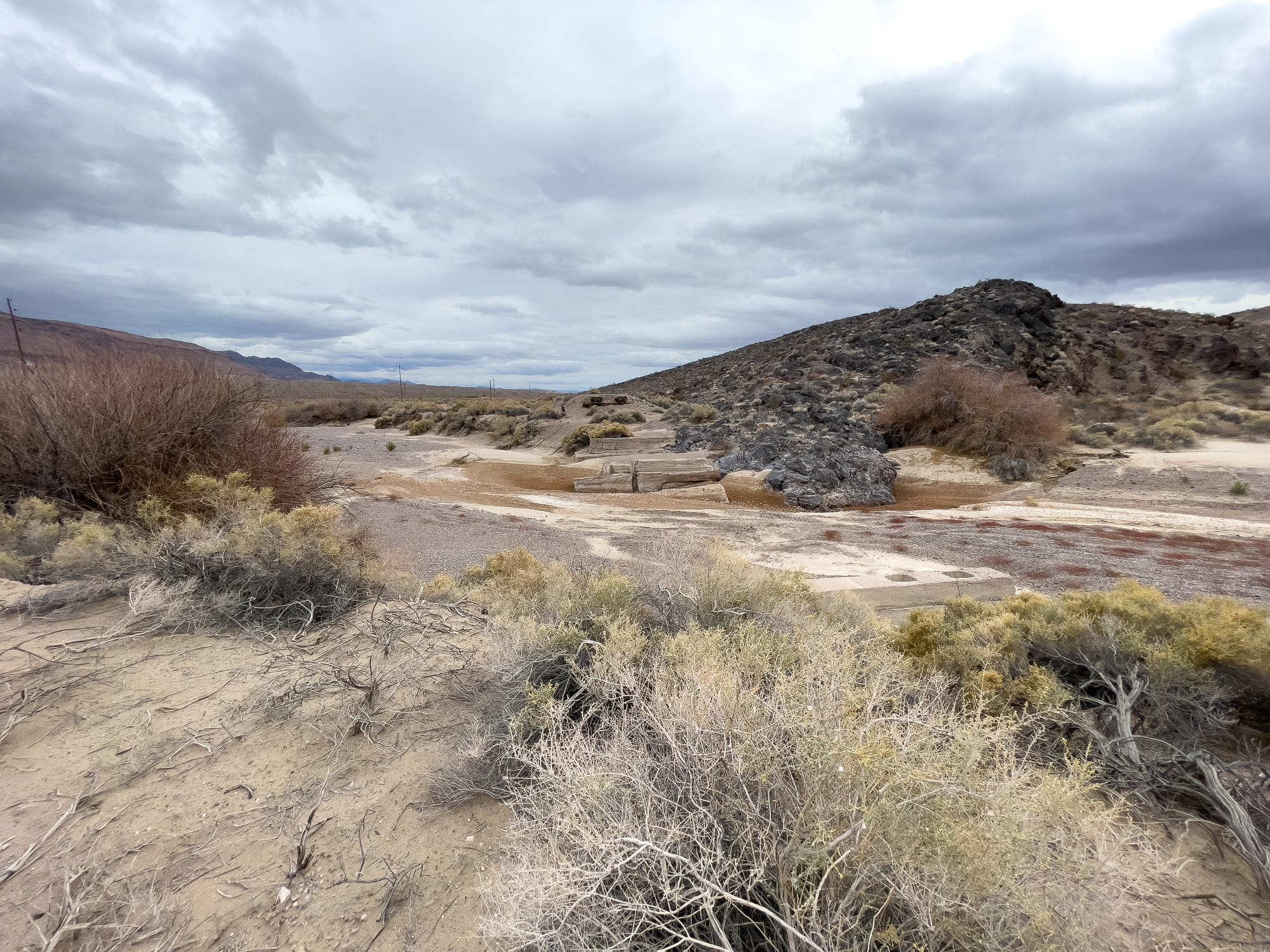
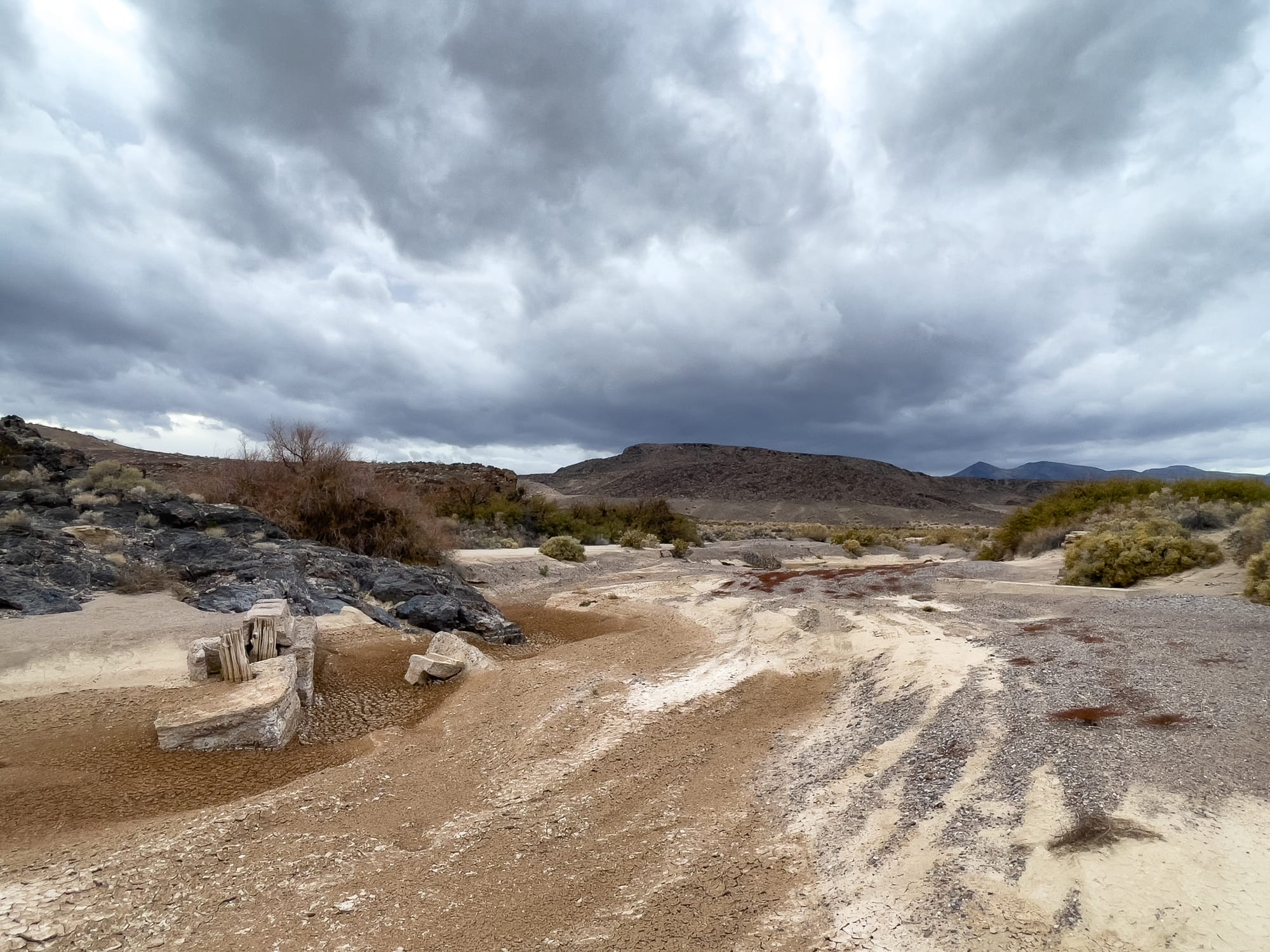
Getting ore out of a place like this was the whole problem of desert mining in a single sentence. PCB's answer was a "baby gauge" railroad, a narrow little line running about three miles down to a siding on the Tonopah & Tidewater that took the mine's name, Gerstley. A Milwaukee gasoline traction engine dragged the ore cars down the grade, and from the siding the T&T carried the borax north to the mill at Death Valley Junction. PCB ran these little gas engines all across its borate country; the bones of that era still sit up at Ryan, the company's preserved camp and railroad deeper in the park.
The baby gauge didn't last long, it was pulled up in 1926, after which trucks simply hauled the ore down to the railroad. The Gerstley kept going. PCB's center of gravity slid west to the giant Kramer deposit at Boron in the early 1930s, which knocked Gerstley production way down, but the mine didn't die. When the T&T itself was abandoned in the late 1930s, ore went by truck to the Dunn siding on the Union Pacific between Baker and Barstow, then on to the port at Wilmington and out to market. Production limped along, on and off, until around 1999.
The company changed names the way these outfits do. PCB folded into U.S. Borax in 1956, and Rio Tinto picked up the whole thing in 1967. Rio Tinto eventually donated one of the Gerstley headframes to the little museum down in Shoshone, where it stands out front now. A tidy way for a mine to end up: as an exhibit about itself.
References
- Mulqueen, Stephen P. "The Gerstley Mine and Borate Deposit Near Shoshone, CA." Shoshone Museum Reader, Issue 18, Fall 2013.
- Myrick, David. Railroads of Nevada and Eastern California, Vol. 2. Berkeley: Howell-North, 1963.
- Serpico, Phil. Tonopah & Tidewater Railroad: The Nevada Shortline. Palmdale: Omni Publications, 2013.
- Greene, Linda W. Historic Resource Study: A History of Mining, Vol. I. U.S. Department of the Interior, March 1981.