Field Report: French Visitor Dies After Becoming Stranded on West Side Road

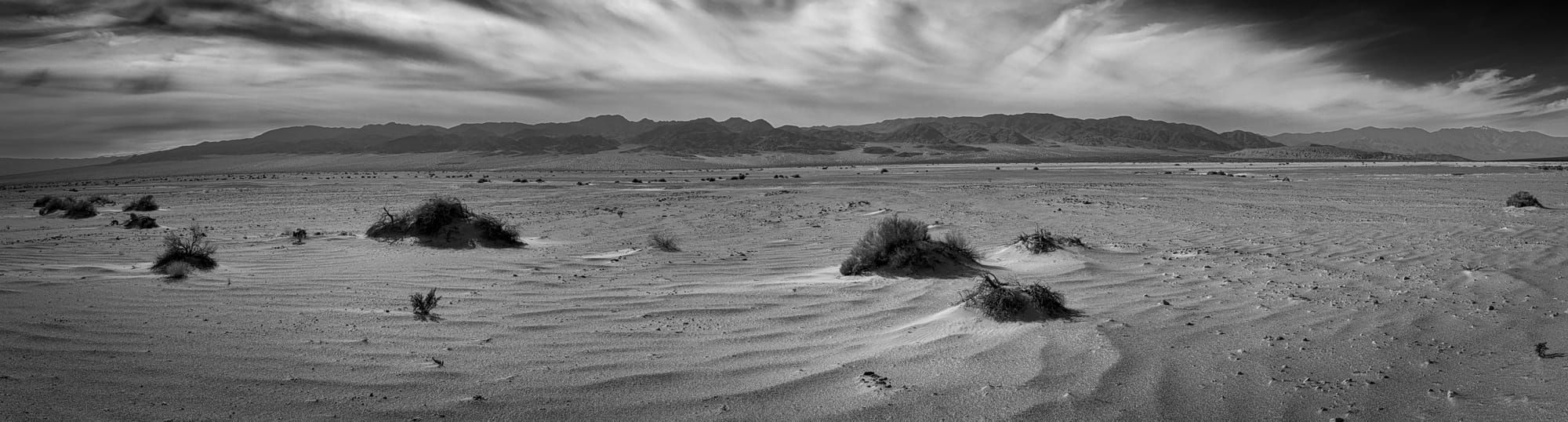
A 68-year-old French visitor died in Death Valley National Park on August 17, 2026, after he and a traveling companion became stranded on West Side Road near the Queen of Sheba Mine Road junction.
According to the National Park Service, Pierre Michel Formosa and his companion, both visiting from France, were traveling on West Side Road when their vehicle became stuck in mud. With no other vehicles nearby, the two left the vehicle and began walking east across the salt flats toward Badwater Road to seek help.
The temperature reached 116°F that day.
After approximately 1.3 miles, Formosa was unable to continue. His companion continued toward Badwater Road, eventually receiving assistance from a passing motorist. The incident was reported at the Furnace Creek Visitor Center shortly after 2 p.m.
National Park Service rangers and an Inyo County deputy began a search and rescue operation at approximately 2:13 p.m. A California Highway Patrol helicopter later located Formosa about 1.5 miles from Badwater Road. He was pronounced dead at the scene.
The Inyo County coroner will determine the official cause and manner of death. While the extreme heat was obviously a major environmental hazard during the incident, it is important not to call this a heat-related death until that determination has been made.
A Note About West Side Road
There is another important part of this incident: road conditions.
The National Park Service's road conditions page was updated on August 13, four days before the incident, and listed West Side Road north of the Warm Springs Road junction as closed due to muddy conditions that had already resulted in multiple stuck vehicles.
The Queen of Sheba Mine Road junction is north of Warm Springs Road.
I don't know what signs were present on the ground when the travelers entered West Side Road, what information they had checked before their trip, or the circumstances that led them there, so I'm not going to speculate beyond that. But it does reinforce something worth repeating: check the current NPS road conditions immediately before heading into the Death Valley backcountry.
A road that was fine on your last visit or fine in somebody's trip report from a week ago, may not be fine today.
And mud in Death Valley should not be underestimated. Monsoon storms can turn washes and sections of playa into traps remarkably quickly, even while the rest of the landscape looks bone dry.
"It's Only a Mile" Doesn't Mean Much at 116°F
On a map, 1.3 miles doesn't look like much.
At 116°F, across an exposed salt flat in the middle of the afternoon, it is an entirely different proposition.
This is one of the reasons the standard advice for a disabled vehicle in remote desert country is usually to stay with the vehicle. A vehicle provides some shelter and shade, contains whatever water and supplies you brought with you, and is vastly easier for searchers, especially aircraft, to locate than a person walking through open desert.
Obviously there are situations where remaining with a vehicle creates its own danger, but walking out should not be the automatic response to getting stuck.
Death Valley Backcountry Safety
Deaths like this are a reason to go over the boring stuff again, because the boring stuff works.
If you're traveling away from the developed areas of Death Valley:
- Check current road conditions before leaving pavement. Conditions can change quickly after storms. Don't assume an open road on an old map, Gaia layer, Google Maps, or somebody's trip report is actually open today.
- Check the weather. This means both temperature and precipitation. Summer thunderstorms many miles away can affect roads and washes where it isn't raining.
- Carry enough water for the trip and for something to go wrong. NPS recommends at least one gallon per person per day, plus additional water for vehicle emergencies. Backcountry travel deserves considerably more margin than a drive between Furnace Creek and Badwater.
- Carry food and basic emergency supplies. Prepare to spend considerably longer outside than you intended.
- Carry real sun protection and some means of creating shade.
- Tell someone where you're going and when you expect to return. Give them an actual route, not simply "Death Valley."
- Carry a satellite communicator or personal locator beacon. Cell coverage across most of Death Valley's backcountry ranges from unreliable to nonexistent.
- Match the vehicle to the road. Four-wheel drive does not make a vehicle immune to deep mud, washed-out roads, sharp rocks, or bad decisions. The NPS specifically recommends two full-size spare tires and extra food and water for backcountry-road travel.
- If the vehicle becomes disabled, think very carefully before abandoning it. In most situations, staying with the vehicle gives rescuers a much better chance of finding you.
- Avoid low-elevation hiking during extreme summer heat. There is no amount of fitness that makes exercising in 115–120°F temperatures a good plan.
Death Valley is huge. Cell service is poor. Rangers may be many hours away. Even a relatively ordinary problem like a flat tire, a vehicle stuck in mud, a mechanical failure, can become an emergency because of where it happens.
The goal isn't to be afraid of the backcountry. It's to arrive with enough equipment, information, and margin that a minor problem stays a minor problem.
Current Safety Resources
Before heading into Death Valley, check:
Death Valley National Park Alerts & Current Conditions
Current road closures, restrictions and other park alerts.
Death Valley National Park Safety
Current NPS guidance on heat, flooding, backcountry travel and other hazards.
Death Valley National Park Backcountry Roads
Vehicle recommendations and information for Death Valley's hundreds of miles of dirt roads.
Wild Death Valley Death Valley Thermometer
Current temperature information for the valley.
And remember that conditions pages are much more useful before you lose cell service.
Sources
- National Park Service, French Visitor Dies in Death Valley National Park, August 21, 2026.
- National Park Service, Death Valley National Park Alerts & Conditions, road conditions updated August 13, 2026.
- National Park Service, Death Valley National Park Safety.
- National Park Service, Backcountry Roads – Death Valley National Park.